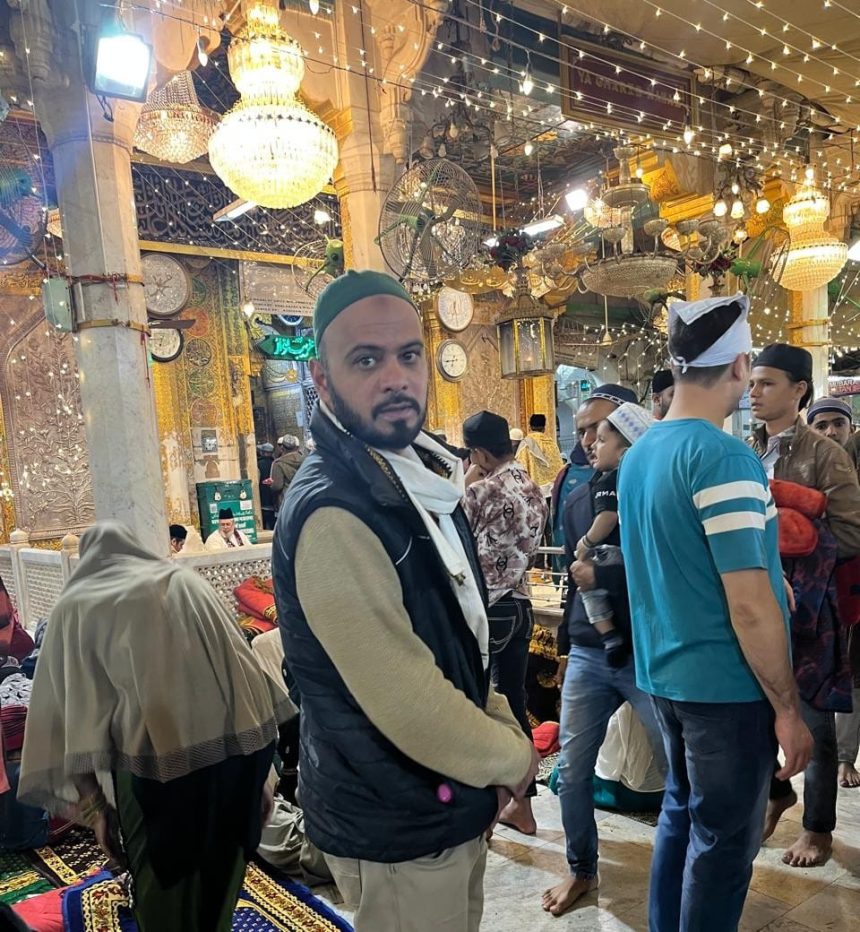
By Er Danish Reshi
Introduction
Kashmir, often called Pir Vaer — The Valley of Saints — is not merely a land of scenic splendor but a cradle of spiritual enlightenment. For centuries, its air has carried the fragrance of Sufiyat — a mystical path that transcends ritual, uniting hearts in divine love. Among the countless saints who shaped the Kashmiri conscience, the Rishi order stands uniquely indigenous, representing the spiritual heartbeat of Kashmir.
The Emergence of Rishi’ism
Rishi’ism, or the Rishi Silsila, emerged as a distinct form of Kashmiri Sufism — deeply rooted in simplicity, purity, and devotion. Unlike other Sufi orders that migrated from Central Asia or Persia, Rishi’ism took birth in the very soil of Kashmir. It resonated with the spiritual temperament of the valley’s people — humble, nature-loving, and contemplative.
The term Rishi itself, borrowed from Sanskrit, signifies a sage or seer — a bridge between Islamic mysticism and ancient Kashmiri spiritual traditions. This unique synthesis made the Rishi order not just a religious movement, but a cultural awakening that emphasized inner purification, self-reliance, and universal love.
Hazrat Sheikh-ul-Alam (RA): Sultan-ul-Arifeen, Alamdar-e-Kashmir
At the heart of Rishi’ism stands the towering figure of Hazrat Sheikh Noor-ud-din Noorani (RA) — lovingly known as Nund Rishi, Sheikh-ul-Alam, and Alamdar-e-Kashmir. Born in 1377 CE in Kaimoh (Kulgam), he became the torchbearer of Kashmir’s spiritual and moral renaissance.
Sheikh-ul-Alam’s message was one of tawheed (oneness of God) and insaniyat (oneness of humanity). He rejected oppression, material greed, and hypocrisy — calling instead for simplicity, hard work, and compassion. His verses, composed in Kashmiri, still echo across generations:
> “Ann poshi teli yeli wan poshi”
(Food will last as long as forests last.)
In these simple words, the Saint of Kashmir wove together faith, ecology, and moral responsibility — centuries before modern environmental discourse began.
His Lineage and Spiritual Legacy
Hazrat Sheikh-ul-Alam (RA) traced his noble lineage to the Reshi clan, a family devoted to spirituality and service. His parents, Noor Shah and Sadra Moji, were known for their piety. The Rishi order that evolved through him became a network of sages — men and women who renounced materialism and spread light through humility and wisdom.
Among his close disciples were Zain-ud-din Rishi (RA), Bamuddin Rishi (RA), and Nema Rishi (RA) — each carrying the divine flame to new corners of the valley. Their hermitages (khanqahs) and shrines became centers of solace, learning, and social reform.
The Spirit of the Reshi Clan
For those who belong to the Reshi lineage, this heritage is not merely ancestral — it is sacred. To be a Reshi is to carry forward a legacy of truth, humility, and service. The Reshi clan’s roots intertwine with the spiritual soil nurtured by Sheikh-ul-Alam (RA). Through centuries, members of this lineage have contributed to education, art, social reform, and spiritual guidance in Kashmir and beyond.
The ethos of the Reshi clan continues to remind us that spiritual greatness is not measured in wealth or power, but in the purity of one’s heart and the service one offers to humanity.
Kashmir’s Rich Sufi Culture
Sufism in Kashmir transcended religious barriers. The shrines of Hazrat Bulbul Shah (RA), Shah-e-Hamadan (RA), Syed Ali Hamdani (RA), and the Rishi saints became spaces where Muslims, Hindus, Sikhs, and others gathered alike — united by love for the Divine. This interfaith harmony became the essence of Kashmiriyat — a culture of compassion, tolerance, and shared spirituality.
Music, poetry, and mystic gatherings (mehfils) enriched this Sufi tapestry. Kashmiri shruks (poetic verses) carried deep philosophical wisdom, inspiring generations to seek the Divine through love and labor, not through sectarian boundaries.
Conclusion
Sufiyat and Rishi’ism are not chapters of history — they are living energies that continue to guide the Kashmiri soul. From Sheikh-ul-Alam’s verses to the silent prayers whispered at shrines across the valley, this tradition teaches us to live with dignity, compassion, and devotion to God.
As descendants and followers of the Reshi lineage, we are the custodians of this luminous legacy. It is upon us to revive the message of Sheikh-ul-Alam (RA) — a message of peace, purity, and love — so that Kashmir remains forever the Valley of Saints and the Land of Light.